четверг, 5 февраля 2015 г.

Three-parent embryos approved in UK

The IVF technique replaces faulty mitochondrial DNA in an egg or embryo with healthy DNA from a female donor.
Next month, when the House of Lords votes to support the change - which it is expected to - the UK will be the first country in the world to permit embryos to be made with the genetic material of three people: a man and two women.
Diseases arising from faulty mitochondrial DNA usually affect several organs, and include symptoms like muscle wasting, loss of movement control, diabetes and epilepsy. They can also cause liver failure, heart problems, stroke-like episodes, and - in severe cases - death.
According to a new study published in a leading journal recently, around 2,500 women could benefit from mitochondrial donation in the UK. This would amount to an average of 150 babies born each year.
The study also estimates around 12,400 women in the US would benefit from the procedure should it be introduced, amounting to around 770 or more births a year.

Three-parent babies could be born in 2016

The team that pioneered the technique at Newcastle University in the UK - led by Doug Turnbull, professor of neurology - is ready to begin trialling the procedure as soon as the new law comes into effect in October 2015, so the first three-parent babies could be born in 2016.
Mitochondria are small "battery packs" inside the body's cells that convert food into energy for cells to function. They have their own DNA that only controls mitochondrial function and energy production.
Mitochondrial diseases particularly affect tissues that have high energy demands, such as the brain, heart, muscles, liver and kidneys.
Mitochondrial DNA is separate from the DNA in the cell nucleus that determines a person's physical appearance and personality.
In normal human reproduction, mitochondria are usually passed on almost exclusively from the mother; the small amount that is present in sperm is only just enough to fuel its passage to the egg and is normally destroyed by the egg cell after fertilization.
Thus, because babies inherit their mitochondria from their mothers, the new IVF technique only replaces genetic material in the eggs of mothers with faulty mitochondrial DNA.

Mitochondrial DNA is 'less than 0.054% of total DNA'

There are two ways to carry out mitochondrial DNA transfer. In one, the nuclear DNA is removed from the egg of the mother and is inserted into the egg of a female donor where the nuclear DNA has been stripped out. The egg is then fertilized with the father's sperm.
In the other technique, the mother's egg is first fertilized with the father's sperm, creating a fertilized egg with nuclear DNA from both parents. This nuclear DNA is then removed and inserted into an egg from a female donor that has had the nuclear DNA removed.
In both cases, the result is an embryo with nuclear DNA from the mother and the father, but with healthy mitochondrial DNA from the female donor, enabling a child to be born free of mitochondrial DNA disease.
Prof. Dame Sally Davies, chief medical officer for England - who strongly urged members of parliament (MPs) to vote in favor of changing the law - says we should remember that mitochondrial DNA is less than 0.054% of total DNA.

Concerns about mitochondrial DNA transfer

Those against legalizing mitochondrial DNA transfer are concerned that it opens the door to other types of genetic manipulation.
If it is okay to repair faulty mitochondrial DNA to prevent genetic disease passing from mother to child, then what about other genetic diseases caused by faults in nuclear DNA? Once you cross this line, then it becomes easier to move toward "designer babies," whose genes are manipulated to select preferred traits.
Campaigning watchdogs like Human Genetics Alert say their main objection to mitochondrial DNA transfer is it alters the "germline" of children. The genetic changes would be present in all cells of their bodies and would be transferred to descendants of girls using the technique.
Others object on the grounds that the new technique is not safe. Dr. Rhiannon Lloyd, from the Zoological Society of London in the UK, warns that in half of animal studies, faulty mitochondrial DNA was transferred over during the procedure, reports The Daily Telegraph. Some say this could raise the risk of cancer.
In contrast to the UK position, in the US there are no plans to change the law, as the Cellular, Tissue and Gene Therapies Advisory Committee of the Food and Drug Administration (FDA) says there is not enough evidence to support the use of mitochondrial transfer in people.
And there are also concerns that mitochondrial DNA influences personality. Dr. Ted Morrow, an evolutionary biologist at the University of Sussex in the UK, notes there are published studies that show this.

'Bold step for parliament'

The MPs who supported the change were of the opinion that the benefits outweigh the risks. During the debate in the House of Commons, ministers said the new IVF procedure was a "light at the end of a dark tunnel" for families.
Public Health Minister Jane Ellison told MPs: "This is a bold step for parliament to take, but it is a considered and informed step."
Prime Minister David Cameron - whose own son Ivan died aged only 6 in 2009 from cerebral palsy and epilepsy - says there is no danger of the procedure leading to "designer babies." He said in an interview on LBC Radio that he saw mitochondrial DNA transfer as more like a kidney donation or a lung donation than a fundamental change. "It is not like playing God," he said.
Dr. Jeremy Farrar, director of the Wellcome Trust, which funds the work of Prof. Doug Turnbull and his team at Newcastle University, welcomes the vote and hopes the House of Lords reaches a similar conclusion. He says the UK's regulatory system is admired around the world and notes:
"This is a vote of confidence in the patients, scientists, doctors and ethicists who have worked hard for a decade to explain this complex research to politicians, the public and the media, and in the exemplary process for reviewing scientific, ethical and public opinion led by the Human Fertilisation and Embryology Authority."
Robert Meadowcroft, chief executive of the Muscular Dystrophy Campaign, agrees and adds:
"There are currently no means to treat devastating mitochondrial diseases, which can cause muscle wastage, loss of vision, stroke-like episodes and a premature death. Preventing inheritance, where possible, remains our only option, and that is why we have invested in and wholly support this pioneering technique."
He says the next step is to make sure the peers in the House of Lords are fully armed with the facts about mitochondrial donation IVF before their debate next month because iIt is absolutely crucial that they fully understand what is at stake for women affected by this condition."

среда, 7 января 2015 г.

Should you fear holiday bulge?

Conventional wisdom says Americans can pack on pounds during the holidays.
A 2013 Consumer Reports survey found that gaining weight was cited as a holiday fear by one out of three Americans.
But is it really something to worry about?
Data suggests that people gain between 1 or 2 pounds, according to Donald Hensrud, director of the Mayo Clinic Healthy Living Program. Hensrud cited a 2000 study by The New England Journal of Medicine.
It doesn't sound like much, but before you head back to the buffet table for another round, consider this: Once it's on, it usually stays there.
"The important thing is that it's cumulative," Hensrud said. "People gain just a small amount of weight but it adds up over time."
He also said that 1 or 2 pounds over an entire population is a significant amount. "It's big, no pun intended," he said.
To avoid the holiday bulge, Hensrud suggested incorporating activities into your family time.
"Go for a walk after a meal. Resist the urge to lay down on the couch," he said. He also advised making food one aspect of the holiday celebration, but not the focus.
"If we equate the holidays and enjoyment with food, we're going to indulge more. So perhaps try to separate that connection a little bit," he said.
Alcohol consumption is also something to be mindful of.
"Alcoholic drinks can be loaded with calories, and because we drink (rather than eat) them, we often fail to recognize them as a significant source of calories," Deborah Balfanz, a Stanford University health professor and a weight management instructor,said on the university's wellness blog.
"Additionally, alcohol lowers inhibitions and increases the likelihood that we'll go back for seconds (or thirds!) of that chocolate cake or deviled eggs," she noted.

Birth control

If you're considering using birth control, you have many options — from natural family planning and over-the-counter birth control products to prescription contraceptives or sterilization.
To help determine which birth control method would be best for you, consider your lifestyle, personal preferences and health status. How do you feel about planning for sex? Inserting birth control devices into your body? Taking a pill at the same time every day or tracking your fertile days? Permanently ending the ability to conceive or father a child?
It's also important to make an honest assessment of yourself, your partner and your relationship. You may have different birth control needs if you have sex often or you're not in a monogamous relationship. Ideally, you and your partner will discuss the options and reach a mutually beneficial decision.

Birth control pills

Birth control pills are a common type of contraception. If you're considering taking birth control pills, you may have more choices than you'd think.
You'll start by choosing either combination birth control pills or minipills. If you choose combination birth control pills, you'll have another choice — conventional packs or continuous dosing. With conventional birth control pills, you'll have a period every month. With continuous dosing birth control pills, you may have a period only four times a year or eliminate your period entirely.
Of course, each type of birth control pill has its own risks and benefits. Understand the basics, then work with your health care provider to determine the best birth control pill for you.

Long-acting reversible contraception

If you know you want to become pregnant someday — just not anytime soon — long-acting reversible contraception may be a good choice for you. With long-acting reversible contraception, you get effective birth control with little day-to-day hassle.
Options for long-acting reversible contraception include:
  • An intrauterine device (Mirena, ParaGard, Skyla)
  • A contraceptive implant (Nexplanon)
  • A contraceptive injection (Depo-Provera)
You need a prescription from your doctor for this type of birth control. Besides its effectiveness and ease of use, long-acting reversible contraception allows for a return to fertility once you stop using the contraception. With the intrauterine device and contraceptive implant, the return to fertility is prompt. With the contraceptive injection, return to fertility may take a little longer.
The intrauterine device or contraceptive implant requires a visit to your doctor for removal if you decide you no longer want to use this type of birth control.

Other birth control options

When you think of birth control options, what comes to mind? Birth control pills are a popular choice, but don't stop there. Other birth control options abound — and the choice is up to you.
If you need birth control only occasionally, over-the-counter male or female condoms might be appropriate birth control options. Condoms also provide protection against sexually transmitted infections. The contraceptive sponge is another option that's available without a prescription. If you're most concerned about effectiveness, a prescription contraceptive such as the vaginal ring might be a better birth control option.
As you consider your birth control options, be open to all the possibilities. Get familiar with how different types of birth control work, as well as the risks and benefits of specific birth control options.

Natural family planning

Natural family planning may be an appealing birth control option if you can't or choose not to use other contraceptives.
Popular types of natural family planning include the rhythm method, the cervical mucus method and the basal body temperature method. You can use these types of natural family planning to predict when you'll ovulate — and when you need to avoid unprotected sex, if you don't want to conceive. Another type of natural family planning is withdrawal, in which the man withdraws his penis from the vagina before ejaculation to prevent pregnancy.
Natural family planning requires motivation, diligence and self-control. Natural family planning isn't as effective as other types of birth control, but it's inexpensive and doesn't have any side effects.


среда, 17 декабря 2014 г.

Yoga May Cut Heart Disease Risk Factors

TUESDAY, Dec. 16, 2014 (HealthDay News) -- Yoga has long been believed to improve overall health, but a growing body of evidence shows the ancient practice may also help the heart, a new review finds.

In fact, the benefits were similar to those of conventional exercise such as brisk walking, said lead researcher Paula Chu, a doctoral candidate at Harvard University's Health Policy Program in Boston.

The review, of 37 clinical trials, found that people randomly assigned to take yoga classes saw improvements in their weight, blood pressure and cholesterol.

"This finding suggests that [people] who are physically limited in some way do not have to 'pound the pavement' in order to improve their cardiovascular risk profile," Chu said.

Still, studies so far have varied in quality and been relatively small and short-term, Chu's team reports in the Dec. 16 issue of the European Journal of Preventive Cardiology.

"We believe there is promising evidence on the effect of yoga on improving cardiovascular risk factors," Chu said. But given the limitations of the research, she added, "we refrain from drawing any definitive conclusions."


One complicating issue is there are many different types of yoga, ranging from gentle stretching and breath work to more vigorous workouts that require a good deal of strength and flexibility.

The trials in the review varied in the types of yoga tested -- as well as the frequency of classes and the people involved. Some studies included healthy people in their 20s, while others focused on older adults or people with heart risk factors like high blood pressure.

http://www.healthywomen.org/content/article/yoga-may-cut-heart-disease-risk-factors

среда, 3 декабря 2014 г.

What is MilanoCard ?

What is MilanoCard ?

MilanoCard is the tourist & travel card of Milan, includes free public transport, free personal driver and benefit for more than 500 services like 30 museums, tours, fine italian food, hotel, shops, events tickets and more.

Valid for 24h or for 3 days (48 hours of transport and 3days of benefit) entitle you to do everything in Milan for a very little price. And now MilanoCard offers more with services also in Lombardy and Rome, Florence and Venice for 1 month!
Discover also the MilanoCard PASS and the MilanoExpoCard. Click here

How does it works ?

Buy the card (with every credit card or paypal account) -> Pick it up at your arrival (Airport or Railway Station)-> Activate your card on public transport automatical machine & Show it at the affiliated services to use the benefit -> Save money and save time – do more!

After the payment you will receive an email with details, photo, map and contact of your pick up location.
ATTENTION – The MilanoCard is personal and not transferable. Everyone need their own card. Children under 10 years are FREE

5 top reasons to get MilanoCard

  • Free Public Transports (Metro, tram, buses, city-trains).
  • Free Personal Driver (2 rides)
  • Free or discounted access to more than 20 museums and 500+ Services.
  • Dedicated Services for shopping, football culture, taste, wellness and Family.
  • Benefit also in Lombardy, Lakes region and Rome, Venice and Florence

Opinions and reviews about the MilanoCard

It is not necessary that we explain you why MilanoCard is a good service and is worth the money, we could not be impartial. We asked to do this to our past customers. Visit www.milanocard.it/testimonial  and you will find short videos of our past customers who explain you why MilanoCard is a great deal!
You can find also the testimoniance of the Ambassadors of MilanoCard, the most important personalities of Milan and the main partners of MilanoCard that will explain you why Milan is worth a visit and why MilanoCard is the best way to do this. Click here and see the videos

четверг, 30 октября 2014 г.

This Irish cottage may really be haunted by violent fairies

LIXNAW, Ireland — All is not well in the cottage at the edge of the Ballynageragh bog.

The simple home lies on the outskirts of this blink-and-you’ll-miss-it village in west Ireland’s County Kerry.

During the last two decades, no fewer than five inhabitants of the tiny white public-owned building died suddenly in tragic and unusual circumstances.

The unsettling events have tapped into a culture of legend and supernatural belief that continues to color life here.

One man dozed off with a lit cigarette and succumbed to smoke inhalation. Another hanged himself shortly after moving from the house. One inhabitant died in a car accident, and a fourth was stabbed to death while traveling in Wales.

Then in November 2013, neighbors found the body of Susan Dunne, 62, in one of the cottage’s bedrooms.

She had moved in 18 months earlier with her autistic teenage son, who stands accused of her murder. Patrick Dunne, 19, is being held in a Dublin mental hospital until his trial in April.

Dunne’s murder was the last straw. Villagers buttonholed Kerry County Councillor Robert Beasley during local election campaigns in May to say they wanted the county-owned house destroyed.

Although Beasley says he raised the motion at council meetings, several factors have delayed a decision about the cottage’s fate.

Among them, no action will be taken until the county has arranged with Susan Dunne’s family to remove her belongings, which remain in the house.

But for all those who want the house leveled, there are also many who argue that the deaths were just a coincidence that doesn’t justify the demolition of a perfectly good dwelling.

Ireland’s devastating financial collapse in 2008 and prolonged recession forced the local authorities to slash budgets. As a result, County Kerry has been slow to replenish its public housing stock. Waiting lists are long.
Some would be happy to live with the cottage’s bloody legacy as long as they have a roof over their heads, locals say.
“There’s a lot of people who would love to have it,” says Paddy Quilter, proprietor of Quilter’s pub in Lixnaw. “All this bullshit about knocking it down — ah.”

Quilter says he doesn’t believe in ghosts. A clutch of locals drinking at the bar nod in agreement. But all are familiar with the host of legends, superstitions and fairies that once populated late-night tales in rural Ireland — and that still have real-world implications for many people.

“In the old days, they called it piseog,” Quilter says, a Gaelic term (pronounced pi-shawg) meaning superstition, voodoo or anything suggesting a supernatural power at hand. “There were a lot of piseogs and ghosts before electricity came in.”

It’s a word someone might use to explain an unusual or unsettling phenomenon — the mysterious deaths of five residents of a single cottage, for example.

Industrialization weakened Ireland’s belief in the fairy world but didn’t stamp it out completely, says Criostoir Mac Carthaigh, an archivist at the National Folklore Collection in Dublin.

As a result, he says, many people adopt a better-safe-than-sorry stance. Some farmers continue their forebears’ habits of not plowing certain parts of a field said to be favored by fairies, while disavowing belief in the supernatural themselves.

“Even down to today, there’s kind of a residual belief and it’s not articulated, it’s not spoken about,” Mac Carthaigh says. “’Leave well enough alone,’ is a phrase you sometimes hear people say.”

Sometimes it goes farther than that.

In 1999, the National Roads Authority was notified that a proposed bypass in western Ireland would destroy a hawthorn bush that played an important role in fairy military history. (You read that correctly.)

Irish fairies are no Disneyfied pixies. They hold grudges. Destroying the bush could result in violent fairy retribution — faulty brakes, mangled cars, death.

The government rerouted the highway and built a protective fence around the bush as an offering to the spirits.
The fairies’ main lobbyist in the human world in that case was Eddie Lenihan, a grizzle-bearded folklorist in western Ireland’s County Clare.

He began his career as a "seanchaithe," or traditional storyteller, when he was completing field research for a masters degree in linguistics and found himself more interested in the stories old folks told than the accents they told them in.

Lenihan says he’s contacted almost weekly by people who want to placate fairies on their property or suss out their feelings about upcoming construction.

His questions about the Lixnaw cottage have nothing to do with council budgets or housing demand.

“Was the house built in a place where it shouldn’t be?” he wonders. “Is there a fairy fort [a remnant of an early Christian structure] nearby?”

“It might be built on a fairy path or a funeral path, which would be a problem,” he adds. “It’d be lunacy to be on one of those. According to the old people, if you’re on a fairy path, you’ll never have peace or luck in a house like that.”

No fairy paths are evident near the cottage today. The low-slung structure, abandoned for almost a year now, stands at the end of a dirt drive blocked by a rusting gate.

Overgrown hedges encircle the property. As storm clouds closed in on a recent windy afternoon, the branches rustled with an insistent sound, like the footsteps of someone or something approaching.

The house next door is for sale.

http://www.globalpost.com/dispatch/news/regions/europe/ireland/141029/ireland-haunted-house-lixnaw-piseog

11 things you should know about Liberia that have nothing to do with Ebola

A quick Google search for “Liberia” brings up nearly one million news results. Almost all of them are about Ebola. Of the West African nations affected by the disease, Liberia has been hit the hardest, with 2,705 deaths so far and at least 4,665 infected — approximately half the outbreak's overall toll. As the outbreak worsens — and all reports indicate that it will — Ebola is likely to be the only thing we hear about Liberia for some time. And that's a huge problem.

In some ways, it makes perfect sense to associate Liberia with Ebola, given the facts of the outbreak, news coverage of it, and the importance of targeting aid where it's most needed. The problem, though, is that the link between Ebola and Liberia is getting mixed up in a toxic cocktail of racist and ahistorical ideas that treat all African nations as sites of hopeless violence, poverty, and disease. That cocktail takes these ideas and reduces Liberians to African hosts for a terrible African disease.

More from GlobalPost: This map shows which is the deadliest infectious disease where you live

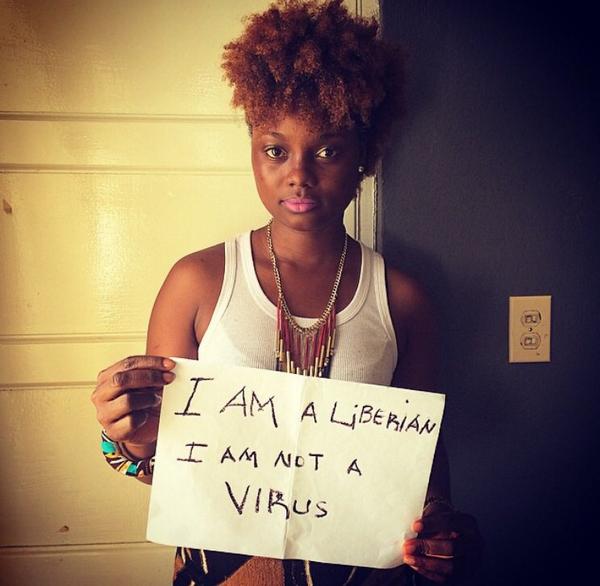
It shouldn't be necessary to remind the world that Liberians are actual human beings, but sadly it is, and efforts to combat the Ebola-related stigma being forced onto Liberians have already begun. Shoana Solomon, a Liberian woman living in the United States, for example, has launched a social media campaign using the hashtag #IamALiberianNotAVirus to send the world a simple, anti-racist message — Liberians are people, not viruses.


With so much focus on Ebola, it's easy to forget the many other things that make Liberia what it is, like its incredible ethnic diversity and fascinating history. Globally, we must be able to battle the ongoing catastrophe in Liberia without forgetting that we're talking about a real place filled with real people and real lives. Talking about Ebola means talking about Liberia, for now. But talking about Liberia shouldn't mean JUST talking about Ebola.

Here are just 11 things you should know about Liberia that have nothing to do with the virus.